Montenegro needs stronger mechanisms to protect pensioners’ living standards
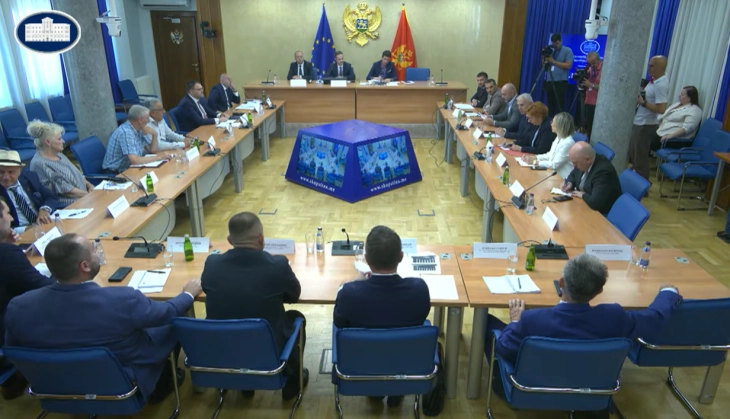
Podgorica, (MINA-BUSINESS) – Montenegro needs stronger mechanisms to improve the position of pensioners and protect their living standards, members of Parliament’s Committee on Economy, Finance and Budget said, while representatives of pensioners’ associations called for a review of the Government’s decision to reject an extraordinary pension increase.
The committee’s chairman, MP Boris Mugosa of Social Democrats, said the focus should be on improving pensioners’ living standards rather than debating how things were a decade ago.
“There is money available. The only question is how those funds are allocated. I could list countless areas where money is being poured in without any results,” Mugosa said during a hearing with acting Director of the Pension and Disability Insurance Fund (PIO) Vladimir Drobnjak on the impact of rising prices on pensioners’ living standards.
Minister of Economic Development Nik Gjeloshaj, Minister of Finance Novica Vukovic, and Minister of Social Welfare, Family Care and Demography Damir Gutic had been invited to attend the hearing but did not appear.
Mugosa warned that prices have risen sharply.
“Talking about cumulative inflation only obscures the real issue. Cumulative inflation is a figure that hides a great deal because it includes products and services that many people do not use in their daily lives,” he said.
MP Mihailo Andjusic of Democratic Party of Socialists (DPS) said the Government’s attitude toward pensions, pensioners and inflation was reflected in the absence of all three invited ministers.
“Not one of the three invited ministers showed up,” Andjusic said.
He noted that over the past five years, prices of food, medicines and healthcare services had risen significantly faster than in the euro area, while Montenegro’s inflation rate had also been considerably higher.
Andjusic recalled that around 50,000 pensioners receive the minimum pension of €450, questioning whether that amount is sufficient. He also warned that the Pension Fund posted a €136 million deficit in the first four months of this year.
Responding to concerns over the deficit, Drobnjak acknowledged it was a major challenge.
“However, Montenegro’s pension system is among the strongest in the region according to several indicators,” he said.
He added that while prices in Montenegro are high, the country remains relatively affordable compared with some others.
“There is room for savings at every level. The state should pay greater attention to its 132,000 pension beneficiaries, who account for between one-fifth and one-quarter of Montenegro’s population,” Drobnjak said.
He argued that by raising minimum pensions over the past few years, the Government had effectively preserved pensioners’ dignity and cushioned the impact of inflation.
Sadik Klimenta of the Pensioners’ Movement of Montenegro urged the Government to reconsider its decision rejecting an extraordinary pension increase.
“We are not asking for charity. We are asking for justice,” he said.
He recalled that many pensioners live below or on the brink of poverty.


