Culafic: Closing Chapter 27 by year-end certain; administrative capacities remain biggest challenge
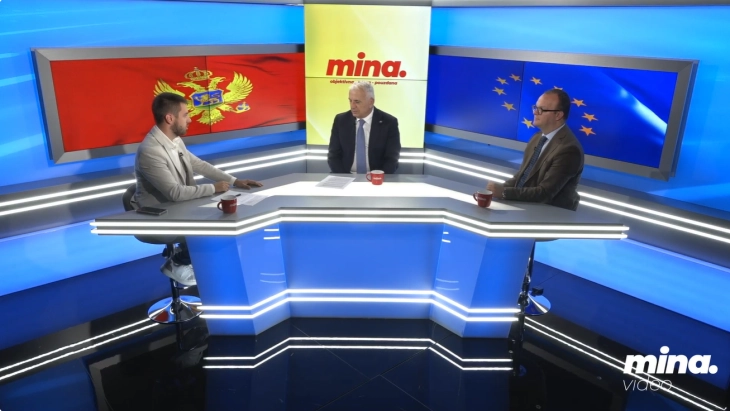
Podgorica, (MINA) – Montenegro will certainly close Chapter 27, Environment and Climate Change by the end of the year, said Minister of Ecology, Sustainable Development and Northern Development Damjan Culafic, stressing that administrative capacities remain the biggest challenge in that area.
Chair of the Parliamentary Committee for Tourism, Agriculture, Ecology and Spatial Planning, Dejan Djurovic argues that the most demanding and expensive chapter in Montenegro’s EU negotiations will be closed by the end of the year.
Culafic said that Montenegro is progressing very well and rapidly in meeting its obligations for closing Chapter 27, adding that the final stage of the negotiations in this chapter is the result of interdepartmental teamwork and effective institutional dialogue.
“I can say freely that we are in the very final stage and that closing the chapter by the end of the year is absolutely certain”, said Culafic in an interview with the MINA News Agency.
He stated that the Government has already approved the legislation necessary for closing the chapter, which is now in the parliamentary procedure.
Culafic said that on the part of Montenegro, almost all the final benchmarks are ready to be closed, but that it is up to the European partners in Brussels to assess that.
In an interview with the MINA News Agency, Djurovic said that Chapters 23 and 24 attract greater public attention, but that Chapter 27 is the most demanding, the most expensive and the most difficult to close, not only for Montenegro, but also for the countries that are now members of the EU.
“I believe that by the end of the year we can present a document to the that we as the Government, the Parliament, the line ministry and the Committee have completed our task and closed the Chapter, which I consider one of my greatest professional and political successes”, Djurovic pointed out.
When asked what is the biggest challenge facing the MERS in meeting the requirements of Chapter 27, Culafic said that there were many challenges in the previous two years, and that administrative capacities were the key.
He pointed out that the financial aspect is also challenging, but that he thinks they are overcoming it.
Speaking about the priorities ahead, Culafic said that several laws under Chapter 27 are currently in the parliamentary procedure, including the laws on environmental damage liability, noise protection, waste management and nature protection, stating that he believes that these laws will be adopted in July.
Djurovic also expressed belief that these laws would be adopted by August 1.
He stressed that August would not be a month of rest, because at this moment, according to him, neither the Government nor Parliament can afford to rest.
The article has been produced as part of the “EU Reality Check” project, implemented by the MINA News Agency. The project is supported through the wider “MedIA-Lit” program, led by the Center for Civic Education (CGO) in partnership with the Helsinki Committee for Human Rights in Serbia (HCHRS), the Helsinki Committee for Human Rights in North Macedonia (MHC), the Tirana Center for Journalistic Excellence (TCJE) from Albania and the Atlantic Initiative (AI) from Bosnia and Herzegovina, with financial support from the European Union and co-financing from the Ministry of Regional Development, Investments and Cooperation with NGOs of the Government of Montenegro.


