New cultural trails promoted as part of the Journey Through Time project
Podgorica, (MINA-BUSINESS) – According to the National Tourism Organization (NTO), the Journey Through Time Project aims to enhance sustainable tourism by highlighting lesser-known cultural sites and jointly promoting the Montenegro and Kosovo region as an authentic, heritage-rich destination.
Last week, NTO organized a three-day study visit as part of the cross-border IPA project Cultural Renaissance from Lake Skadar to Kosovo (Journey Through Time), implemented with the support of the European Union (EU).
“This study visit brought together key tourism stakeholders to present the project’s results and promote the new thematic cultural tourism product developed under the Journey Through Time project,” the NTO stated in a press release.
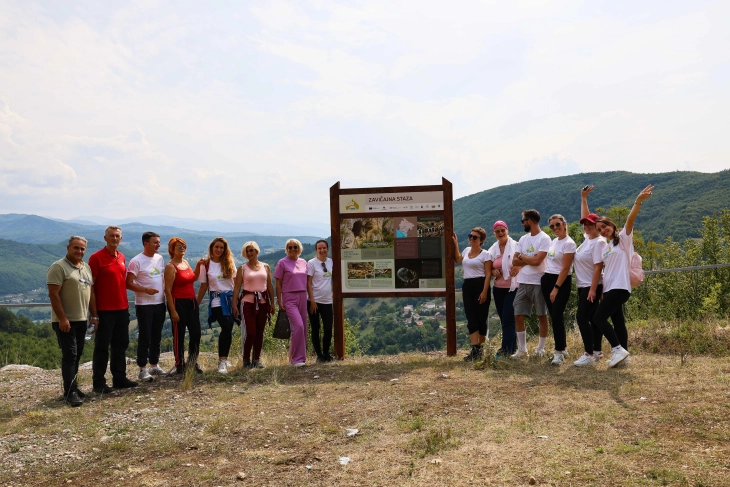
During the visit, three of the five new thematic trails developed in Montenegro were showcased in Podgorica, Rozaje, and Petnjica.
Participants had the opportunity to explore cultural and historical trails designed to trace the rich history of this cross-border region, from ancient times through the medieval and Ottoman periods to more recent history.
In addition, they enjoyed the natural beauty, local cuisine, and connected with tourism service providers and project partners.
Particular focus was placed on an interpretative approach, which presents local heritage in an engaging and educational way through stories, symbols, and authentic on-site experiences.
NTO project manager Matea Matan stated that Journey Through Time is not just a tourism product but a story about shared identity, heritage, and collaboration between communities on both sides of the border.
“Through this project, we have demonstrated that lesser-known destinations have strong potential to become attractive points on the cultural map of the region. Through thematic trails, authentic stories, and collaboration with local communities, we have created a sustainable promotion model that respects the past while opening doors to future tourism development,” Matan said.
Arta Gorani, project manager from lead partner CDF in Kosovo, stated that the study visit demonstrated how cross-border cooperation can be a powerful tool for leveraging the potential of shared heritage.
“Working on this project has further connected us and created new opportunities for regional tourism,” Gorani added.
A study visit to Kosovo is planned by the end of August, along with the public presentation of the new tourism product, supported by promotional tools such as a joint web platform and a brochure.
The project is implemented by CDF, the Municipality of Kline, the Centre for Sustainable Tourism Initiatives (CSTI) from Podgorica, and NTO.


