Sunter: Europe must take greater responsibility for its own security
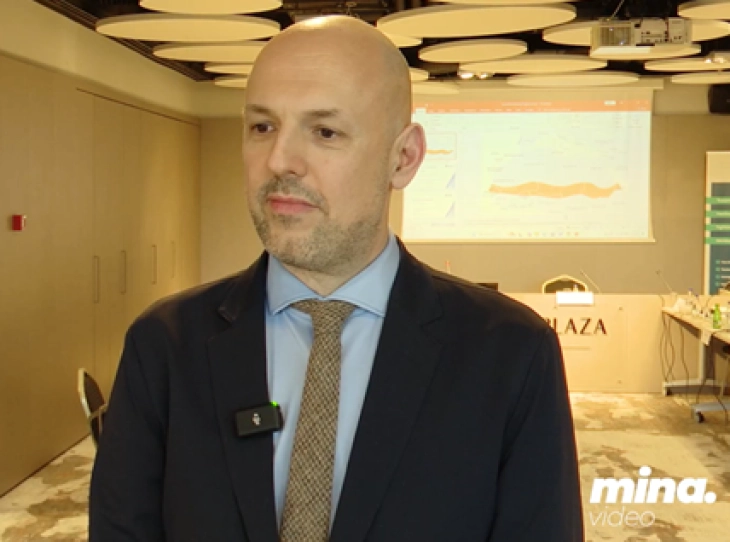
Podgorica, (MINA) – Europe must assume a greater level of responsibility for its own security, and the EU enlargement to the Western Balkans can be seen as a test of the enlargement policy capacity, said executive director of the Balkan Security Network, Daniel Sunter.
In an interview with the MINA News Agency, he said that the EU and NATO integration have proven to be the best guarantees for stability and predictability, as well as that cooperation within the EU and NATO frameworks has no alternative for the Western Balkans when it comes to security threats.
When asked whether Europe is ready to face challenges arising from global conflicts and changes, as well as strained relations between the EU and the USA, Sunter said that Europe must take on more responsibility than before.
He pointed out that it is not only a matter of the attitude by the current U.S. administration led by President Donald Trump, recalling that even during Joe Biden’s presidency there were calls for Europe to take more responsibility for its own security and invest more in its defense.
When asked whether all these developments have led to greater unity in Europe, Sunter answered in the affirmative, adding that it has definitely led to a greater connectivity.
Commenting on how these changes are reflected in the Western Balkans, Sunter emphasized that the region closely monitors what Washington, Berlin, Paris or Brussels say, adding that most countries in the region are committed to EU and NATO integration.
As he pointed out, this has proven to be the most effective path to stability, even in such unpredictable times as the present.
When asked to identify the main security risks for the region, Sunter pointed to the broader European issue of Russia’s invasion of Ukraine and the impact it has on the entire continent, including the Western Balkans.
On the other hand, when it comes to local security threats, Sunter believes that they are more linked to organized crime, corruption, and emergency situations, as well as to fighters from the region joining foreign battlefields.
Asked whether the Western Balkans is less and less in the focus of the U.S. administration and whether this creates space for some other actors, Sunter said that he is not sure how this perception reflects reality, pointing the U.S. military presence in the region.
When asked how prepared the Balkan countries are to respond to crises such as cyber attacks, geopolitical shocks or internal destabilization, Sunter said that few countries possess capacity to manage such threats on their own.
Speaking about Montenegro, Sunter noted its leading position in EU accession negotiations, stressing that this has positive effects on the region.
He expressed hope that all Western Balkans countries will secure their place in the European and Euro-Atlantic framework in the near future, adding that he does not see a better solution to region’s problems than European and Euro-Atlantic integration.
On the other hand, Sunter said that he hopes that Brussels will listen and understand the needs of the region, pointing out the importance of consensus among EU member states, especially when it comes to enlargement.