Political and social consensus needed on electoral reform
Podgorica, (MINA) – Montenegro’s electoral reform has not been completed with the adoption of key legislation in July, and further reforms will require political and social consensus, that include, among other things, the improvements to the register of residence, the voter registry, and the amendments to the Law on the Election of Councilors and Members of Parliament.
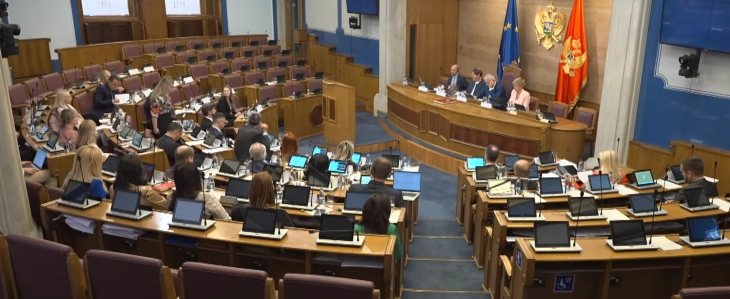
This was heard during the second day of the meeting of the EU -Montenegro Stabilization and Association Parliamentary Committee (SAPC), held in Podgorica.
Chair of the Electoral Reform Committee and Europe Now Movement (PES) MP Vasilije Carapic said that the electoral reform is an important segment of Montenegro’s EU path.
He recalled that at the previous SAPC session in April, when he had spoken about electoral reform, he had emphasized several goals – the professionalization of the State Election Commission (DIK), transparent financing of election campaigns, and holding all local elections in one day.
“From April to July, we met all the goals and in that way PES demonstrated that is possesses the maximum capacity to solve the biggest challenges through consensus”, stated Carapic.
He recalled that the amendments now stipulate that all local elections will be held on June 13, 2027, stressing that a compromise was reached between the government and the opposition, as well as that the DIK has been transformed into the Central Election Commission, while the Law on Financing of Political Entities and Election Campaigns was adopted in line with the ODIHR recommendations.
Carapic also stressed that progress was made in raising the quotas for the representation of women on electoral lists from 30 to 40 percent, and that some electoral practices will be criminalized through the changes to the Criminal Code.
Independent MP Radinka Cincur said that it is a good solution to hold all local elections on the same day and that the MPs are at least declaratively in favor of a professional election commission.
“It remains to be seen how our colleagues will value that professionalism. I hope it won’t be as it was in the case of the election of the Constitutional Court judges. And I hope we won’t have any more precedents like in Savnik and now Kotor”, stated Cincur.
MEP Suncana Glavak said that it is good that the elections are to be held on the same day throughout the country, but that the method of applying women’s quotas remains a problem, as it still depends on the party leaderships if women would enter the parliament and be able to use their mandates.
Social Democrat MP Boris Mugosa pointed out that all MPs participated in the adoption of normative solutions concerning the electoral reform and that one part of the government, which was against the solution for many years, decided to vote for them now.
Mugosa pointed out that an agreement was reached regarding holding all local elections on a single day, but that the discussion on parliamentary elections was not part of the electoral reform.
SAPC Co-chair Thomas Weitz said that there are various systems in the EU member states regarding open lists, but warned that the most important is that the rules are transparent, that there is independent supervision, and citizens’ trust.
Speaking about party financing, Weitz said that accepting small donations from citizens, which are transparently announced, is acceptable, but large or foreign donations should not be allowed because, as he said, the democratic interest of citizens should be a priority.


