Vukovic: Global order in deep fragmentation, small countries most vulnerable
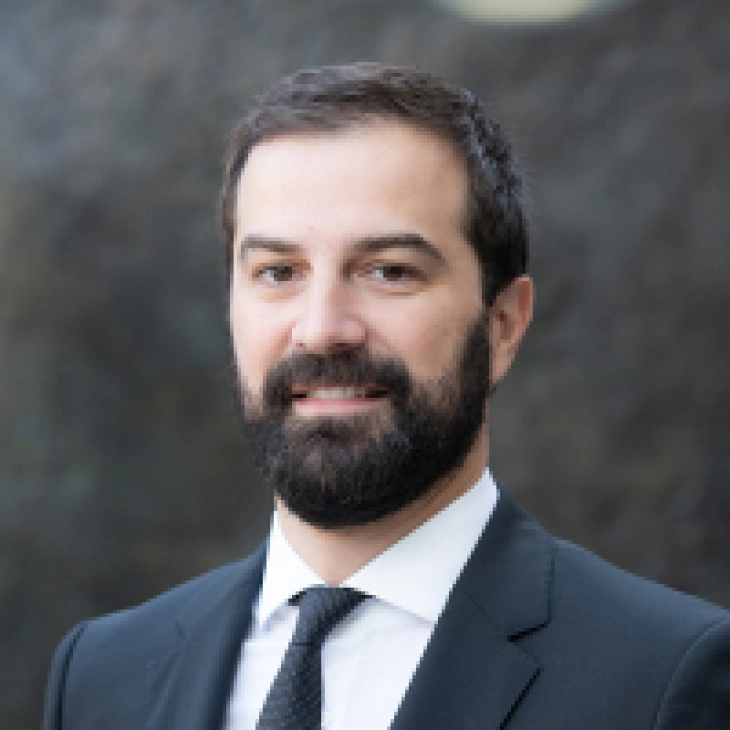
Podgorica, (MINA) - The global order is undergoing deep fragmentation due to the wars in Ukraine and the Middle East, increasing the vulnerability of small countries such as Montenegro, analyst Sinisa Vukovic said, stressing that the best shield against global turmoil and malignant influences is internal democratic resilience.
Vukovic, who teaches at Johns Hopkins University in Washington, said that the current conflicts indicate the weakening of the international system based on law, the growth of unpredictability in the great power relations and the transition to a polycentric world driven by raw power.
In an interview with the MINA News Agency, Vukovic said that the current escalation in the Middle East is not an isolated event, but a consequence of long-term structural problems, primarily the unresolved Palestinian issue.
“In recent years, the focus of the international community, especially Washington, has been on the normalization of relations between Arab states and Israel through so-called transactional diplomacy, based on the assumption that economic interests will outweigh political and identity disputes”, Vukovic said.
He assessed that the current conflict shows the limits of such an approach, stressing that economic cooperation cannot replace deep-rooted conflicts that require a systemic, political and, above all, fair solution.
According to Vukovic, the conflict is far from a stage where resolution is possible and is caught in a dangerous escalation spiral that is difficult to control.
War in Ukraine as a turning point
Speaking about the war in Ukraine, Vukovic said that it represents a key rupture in the current global system and the return of territorial conquests as an instrument of state policy.
He assessed that this war of attrition shows the limitations of Western assessments and reveals fractures within the West, which revisionists are exploiting.
No real winners, international order the biggest loser
Asked who the biggest geopolitical loser is, Vukovic said that the most obvious loser is the system of international law established after the Second World War, as well as societies located on geopolitical fault lines, such as Ukraine, whose sovereign rights are being violated by brutal force.
“At this moment, there are no real winners, everyone is losing”, said Vukovic.
UN Security Council paralysis mirror of reality on the ground
Speaking about the role of the United Nations (UN), Vukovic said that this international organization is facing political marginalization, but that its importance remains indispensable.
“The Security Council is effectively paralyzed, but that paralysis is not a systemic flow of the institution itself, but reflects the reality on the ground”, said Vukovic.
EU is in the phase of geopolitical awakening
Vukovic assessed that the EU is also going through a phase of geopolitical awakening, following the collapse of earlier assumptions that economy is a guarantor of stability and peace.
“The future of the Union will depend on its ability to build true strategic autonomy, not to distance itself from the U.S., but to ensure its own survival if Washington, due to internal polarization, decides to withdraw strategically”, stressed Vukovic.
New alliances and risks for small countries
Vukovic said that the world is transitioning from deeply institutionalized and value-based alliances to minilateral formats and ad-hoc partnerships, based on interests, stating that this represents a special challenge for small countries.
“For small countries like Montenegro, such fluid, transactional polycentricity represents the most dangerous possible scenario. Small countries can achieve security and prosperity only within an order in which the behavior of major actors is restrained and regulated by clear, predictable international norms”, explained Vukovic.
He assessed that the Western Balkans is not at the center of global events, but that it is extremely sensitive to their consequences.
“Local political elites and ethno-national “entrepreneurs” are carefully watching Washington’s hesitancy or disunity in Brussels. When they feel that the focus of the West is scattered on Ukraine or the Middle East, they see it as an opportunity to test the red lines”, warned Vukovic.
He added that the region is not currently on the brink of the conventional war like those the 1990s, but that the danger of a serious and violent security crisis is quite real.
Vukovic believes that the countries of the region should abandon the idea of “sitting on two chairs” and make a clear decision.
Vukovic said that for Montenegro, alignment with the EU and NATO is the only way to protect its sovereignty and credibility, noting that real sovereignty is realized today through alliances, and not in isolated neutrality in the Balkans.
Internal stability is key
Vukovic said that foreign policy and national security always begin and end at home, and that internal political polarization and weak institutions pose the greatest risk.
“Membership in Euro-Atlantic structures is a necessary but insufficient condition for stability. The best shield against global turmoil and malignant influences is internal democratic resilience, what we call democratic security”, Vukovic said.
Therefore, as he emphasized, Montenegro’s genuine integration to the modern Western system of values is not measured by declarative statements or how many times decision-makers are photographed while shaking hands with officials from Brussels or Washington, but solely by the unequivocal strength of the rule of law, the impartiality of institutions and the resilience of its own democratic system.