Radovic: Innovation must be in service of stability and trust
Podgorica, Pula, (MINA-BUSINESS) – According to Governor of the Central Bank (CBCG) Irena Radovic, central banks and regulators should create space for innovation within a framework of clear rules, responsible oversight and robust safeguards aimed at preserving the stability of the financial system.
“Innovation has real value only if it delivers measurable benefits to citizens and businesses, while preserving the security, stability and integrity of the financial system. The role of central banks is to ensure that innovation develops within a well-regulated, transparent and secure framework,” Governor Radovic stated.
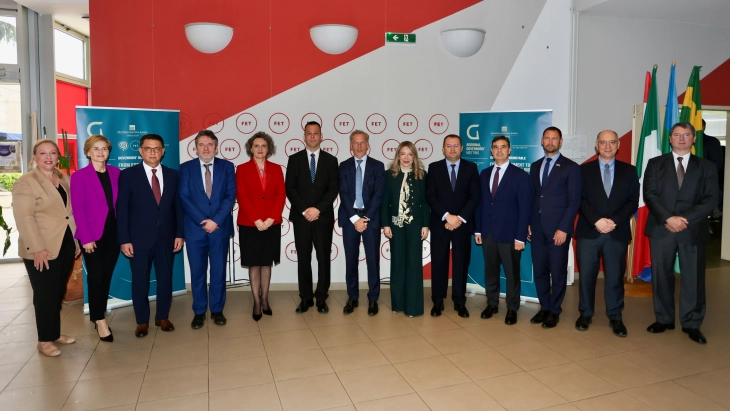
She took part in the Regional Meeting of Central Bank Governors, hosted by the Croatian National Bank on 14 and 15 May in Pula.
“The meeting brought together governors of central banks from across the region to discuss current economic developments, inflationary challenges, the digital transformation of the financial system, and the future of payment infrastructure,” the CBCG stated in a press release.
Radovic participated as one of the panellists at a roundtable discussion of governors titled “From Experiment to Infrastructure: Digital Assets in the Traditional Financial World” at the “Dr Mijo Mirkovic” Faculty of Economics and Tourism, attended by a large number of students, academics and business representatives.
“During the discussion, it was emphasised that digital assets, including stablecoins and central bank digital currencies, are increasingly becoming integrated into the traditional financial system. Participants discussed how the potential of these innovations could be harnessed to enable more efficient and accessible payments, while safeguarding financial stability, consumer protection and monetary sovereignty,” the press release reads.
Speaking about Montenegro’s experience, Radovic highlighted the importance of modernizing payment infrastructure through the SEPA and TIPS Clone projects, as tangible steps towards faster, cheaper and safer payments in line with European standards.
Following its operational accession to the SEPA area, Montenegro moved, according to the World Bank report, from being the country with the highest cross-border payment costs in the region to the country with the lowest payment costs for transactions towards the European Union.
Radovic also presented the PKCG’s activities related to the establishment of an instant payment system through the TIPS Clone platform, which is being developed in cooperation with the Banca d’Italia and with the support of the European Central Bank and the World Bank.
“The full market launch of this system is planned for 20 July 2026, providing Montenegro with a modern infrastructure for instant euro payments, based on interoperability, security and compliance with European standards,” the press release states.
The discussion also covered the digital euro as the next phase in the development of the European payment and monetary system.
Regional meetings of the governors of Croatia, Slovenia, Montenegro, Bosnia and Herzegovina, North Macedonia and Kosovo provide an important platform for the exchange of experiences, strengthening cooperation among central banks, and jointly addressing the challenges shaping the future of monetary and financial policy in the region.


