Chapter 2 brings more rights and less uncertainty for citizens
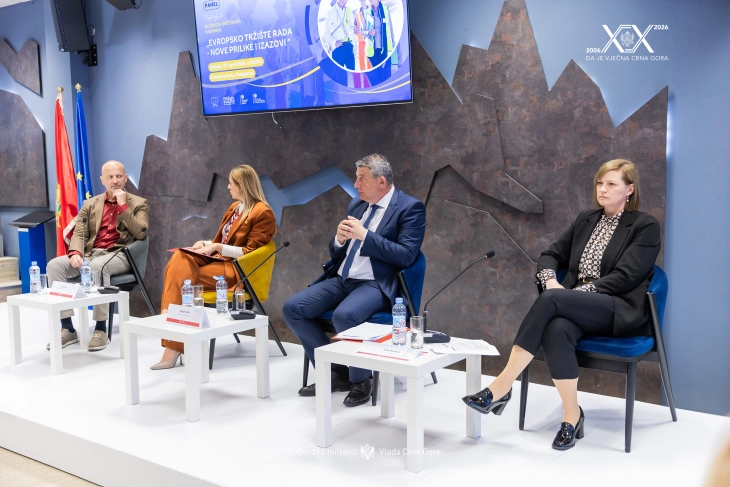
Podgorica, (MINA-BUSINESS) – It was concluded at a panel held at Europe House in Podgorica that Chapter 2 – Free Movement of Workers brings more rights, greater security, and less uncertainty for citizens through improved protection and equality of workers, regardless of where they work.
This chapter establishes clear rules applicable in all EU member states, on which citizens can rely, without distinction between domestic and foreign workers.
The panel titled “European Labour Market – New Opportunities and Challenges” was organized by the Ministries of European Affairs and Labour, Employment and Social Dialogue, with EU support through the EU4ME project, as part of the “28 by 28” campaign, ahead of the planned closure of this chapter at the Intergovernmental Conference at the end of May.
Minister of European Affairs Maida Gorcevic said that Chapter 2 covers policies that directly shape citizens’ daily lives, from employment and the labour market to the protection of workers’ rights and social security.
“Chapter 2 regulates the right of citizens to work anywhere within the European Union, without discrimination based on nationality. EU citizens are equal, and when I say that, I mean not only in terms of values, but through clearly defined rules that are consistently applied,” Gorcevic said.
Minister of Labour, Employment and Social Dialogue Naida Nisic said that Chapter 2 lays the foundation of the European labour market and brings broader opportunities for citizens and employers.
“Through negotiations within the framework of the free movement of workers, Montenegro’s labour market will be more effectively integrated into a single European space, where knowledge, skills, and experience can circulate freely where they are most needed. This not only enhances economic competitiveness but also fosters innovation, productivity, and sustainable growth,” Nisic concluded.