Pavlicic: Guidelines further strengthen position of war crime victims in court proceedings
Podgorica, (MINA) – The Supreme Court, by adopting guidelines on exercising the right to compensation for victims in criminal proceedings, which also apply to victims of war crimes, has further strengthened their position in court proceedings, said President of that court Valentina Pavlicic.
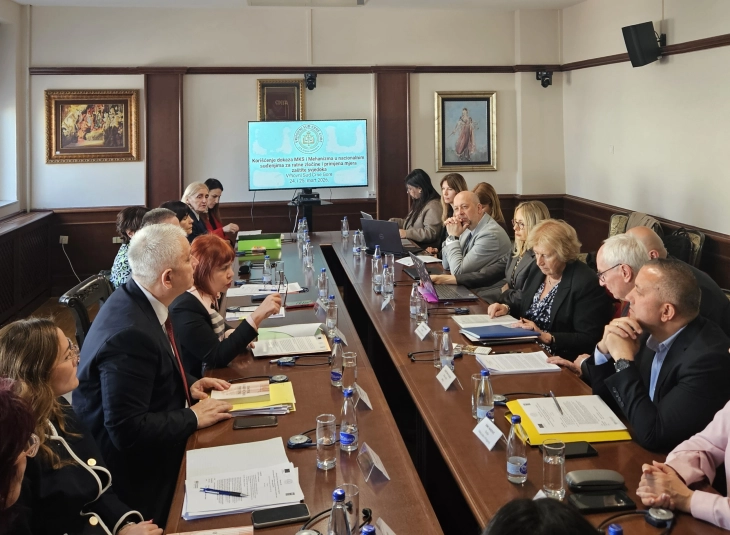
The Supreme Court announced that improving efficiency in the processing of war crimes cases was the focus of a meeting held at that court, where the use of evidence from the International Criminal Court (ICC) and the Residual Mechanism was discussed, as well as the application of witness protection measures.
As stated, the two-day meeting was organized with the aim of further strengthening the judiciary’s capacity in processing war crimes and improving cooperation with international institutions and courts in the region.
The activity was implemented with the support of the regional EU funded project “EU Support for Confidence Building in the Western Balkans”, and the project “Strengthening the Transitional Justice Process in the Western Balkans”, financed by the UK Government and implemented by the UNDP.
In addition to Supreme Court judges, the meeting was attended by the President and judges of the Podgorica High Court, judges of the Appellate Court of Montenegro, as well as representatives of the International Criminal Court and the Court of Bosnia and Herzegovina.
Pavlicic emphasized that at the end of last year, the Supreme Court adopted guidelines on exercising the right to compensation for victims in criminal proceedings, which also apply to victims of war crimes, which, as she said, further strengthens their position in court proceedings.
During the meeting key issues related to the legal nature, admissibility and use of evidence from international tribunals in national proceedings were discussed, including the conditions for using prior witness statements.
The meeting also addressed practical challenges in regional and cross-border cooperation in war crimes cases, including the exchange of evidence and improvement of bilateral cooperation.