Fight against anti-Romanyism demands courage and action
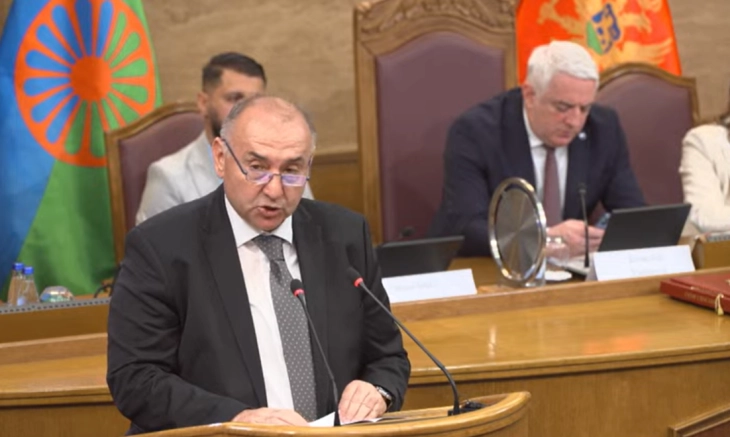
Podgorica, (MINA) – Many members of the Roma community still face discrimination, poverty and difficult access to education, employment and health care, Ombudsman Sinisa Bjekovic said at the session of the Roma Parliament.
During the fourth session of the Roma Parliament, organized by the Human Rights and Freedoms Committee in cooperation with the Ministry of Human and Minority Rights and the Human Rights and Freedoms Protector, it was noted that anti-Romanyism is not always overt, but is sometimes hidden in silence and missed opportunities.
Bjekovic said that the real obstacles and challenges on the path to the integration of Roma into society are not unique to Montenegro, but are present in many communities that possess significant resources and more means and instruments in achieving the fundamental goal of improving the quality of life of the vulnerable population.
“One of the key problems of the Roma community is the risk of statelessness, as well as the lack of clearly defined civil legal status”, said Bjekovic.
He added that the issue of quality education is not confined to that filed, but significantly affects all stages of life, particularly in terms of competitiveness in the labor market.
Parliament Speaker Andrija Mandic said that the Montenegrin Parliament reaffirms its commitment to building an inclusive and just society, sending a clear message that the dignity of each individual is the foundation of a shared future.
“When we talk about Roma integration, we pay special attention to six key areas: education, health care, employment, legal status, social security and family protection”, said Mandic, adding progress has been made in each of these areas, but that the entire society still has much work to do.
According to him, the issue of political representation of Roma and Egyptian communities deserves special attention.
“The Roma do not have authentic representatives in the Parliament of Montenegro. I believe that with the return of the opposition to the Electoral Reform Committee in the coming period, a serious and responsible dialogue on this issue will be opened”, Mandic said.
Minister of Human and Minority Rights Fatmir Gjeka pointed out that throughout history, Montenegro has been an example of the coexistence, diversity and mutual respect, and that it is precisely on these foundations that a society of equal opportunities is built.
He said that they recorded a significant decrease in the ethnic distance towards Roma and Egyptian community, from 0.55 in 2021 to 0.36 last year, which is a clear indicator that awareness in society is changing.
“Nevertheless, we do not close our eyes to the fact that discrimination and anti-Romanyism still exist, especially in the fields of employment and education”, stated Gjeka.
National coordinator for Roma issues Sokolj Beganaj said that Roma community has been silent for too long, but that it has never been weak.
He emphasized that equality has no alternative and that justice must not wait.
“The truth is simple but powerful – Romaare not the problem of society, the problem is the obstacles placed before them, the problem is the silence where there should be a loud advocacy for justice, the problem is the inequality that inhibits and holds us back”, emphasized Beganaj.