Cikotic: Montenegro cannot join EU unless government cooperates with opposition
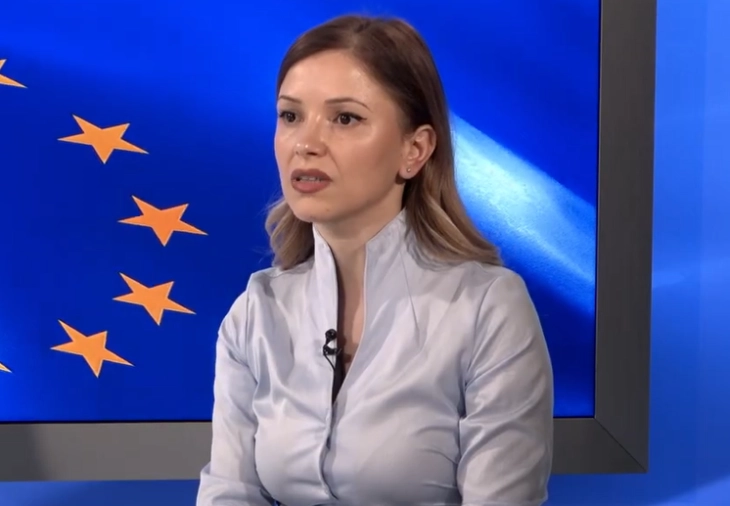
Podgorica, (MINA) – Without substantive cooperation between the government and the opposition in Parliament, there can be no further progress on the European path, particularly when it comes to obligations under Chapters 23 and 24, European Alliance (ES) representative Amina Cikotic said, adding that the ruling majority is currently showing no willingness to engage in dialogue.
In an interview with the MINA News Agency, Cikotic said that proposals to introduce open lists, which have been discussed in recent months, are part of political competition and lack genuine intent to be implemented.
She said that ES is currently in talks with several political actors and non-political organisations, as well as with a large number of non-partisan and independent individuals who are prominent in society, and expressed belief that some of these discussions will, within the next two months, translate into concrete agreements.
She said that their goal is to offer a serious alternative option on the opposition side and within the sovereigntist bloc.
“We do not expect to be the largest actor on this side, but I believe we can be the most progressive, the best and the highest-quality part of the opposition political scene in Montenegro today, and that is our ambition,” Cikotic said.
According to her, it is logical that Montenegro should enter the EU with a government that includes ES, as the parties that make it up have promoted European ideas in their programmes since their founding.
Montenegro in a political crisis, no EU progress without cooperation between government and opposition
Asked whether Montenegro is in a political crisis or, due to the progress it is making on the path towards the EU, in a phase of stabilisation, Cikotic assessed that the country is in a deep political crisis because the ruling majority is failing to establish the level of communication it should have with the opposition, in order for Montenegro to truly continue its European path and ensure the stabilisation of all processes.
“We are witnessing a completely contradictory situation – Montenegro is the leading country in European integration and the ruling majority boasts about the number of chapters closed, while at the same time part of that majority essentially wants to halt the European path,” Cikotic said.
She criticised the way laws are being adopted in parliament, stating that the amendments to the Law on Internal Affairs and the Law on the National Security Agency (ANB) crossed “red lines”, which, as she recalled, was the reason the opposition left parliamentary committees.
“I do not believe it is possible to carry out any process related to EU accession without close cooperation between the government and the opposition. For certain chapters, especially Chapters 23 and 24, which are key to our European path, it will not be possible to meet the Union’s requirements without cooperation between the majority and the opposition,” Cikotic warned.
She added that, despite this, the ruling majority shows no willingness to cooperate with the opposition.
“We will not vote for any legislative proposal put forward by the ruling majority unless they demonstrate a willingness to improve relations, that is, to resolve all the problems that have arisen due to the adoption of disputed laws in the field of security,” Cikotic said.
She noted that there have still been no open initiatives from the ruling parties to launch a dialogue.
“This cannot be done in the way they usually practise – by inviting the opposition to talks through the media or via press releases. A broader-level dialogue must be opened so that we can truly reach agreement and recognise a sincere intention on both sides to unblock the situation and end the political crisis,” Cikotic said.
She added that she does not currently see such willingness within the ruling majority, noting that it appears that only pressure from the international community could help the ruling majority realise that many laws, e specially those related to Chapters 23 and 24, cannot be adopted without the opposition.
Open list proposals mark the beginning of the election campaign
Commenting on electoral reform, Cikotic noted that proposals to introduce open lists are part of political competition and lack genuine intent to be implemented.
She said that ES supports the introduction of open lists and is ready for it, but also assessed that she does not believe it will be possible to introduce them within a timeframe that would allow the 2027 elections to be held under that model.
“All proposals for electoral laws that have come from political actors in the previous period seem to me to be nothing more than a race for a few additional political points, without any real substance. I do not believe these laws will be adopted, and I think that citizens will once again be misled in this regard,” Cikotic said.
Asked whether this means that political parties, or at least most of them, have already entered the campaign for the next elections, leaving further electoral reform aside, Cikotic answered in the affirmative.
“Absolutely, and I would say that they are using these proposals on electoral laws and everything related to open lists as the beginning of their campaign,” she said, adding that it is evident that parties are already gradually positioning themselves on the political scene and that the race has already begun.
Many achievements since independence, rule of law remains the key challenge
Commenting on the situation in Montenegro on the occasion of marking twenty years since the restoration of independence, Cikotic said that since 2006 Montenegro has achieved important foreign policy and strategic goals, but that the key challenge remains the building of the rule of law.
“Just as there would have been no independent Montenegro without the parties that today make up ES, there will be no full EU membership without us in government,” Cikotic said.
Despite the fact that over 20 years of restored independence Montenegro has achieved important goals such as NATO membership and progress on the European path, Cikotic believes that the most significant missed opportunity has been the building of a rule-of-law state.
“What I see today as the greatest challenge is the creation of a truly rule-of-law state with strong institutions that would drive the country forward. When you have strong institutions, it becomes irrelevant which political structures come to power, because strong institutions will balance everything,” Cikotic concluded.
(kraj) sel