CDT: Good neighborly relations often used for politicize tensions
Podgorica, (MINA) - The principle of Good Neighborly Relations (GNR) is often used as a tool to politicize existing tensions between EU member states and candidate countries, according to an analysis by the Center for Democratic Transition (CDT).
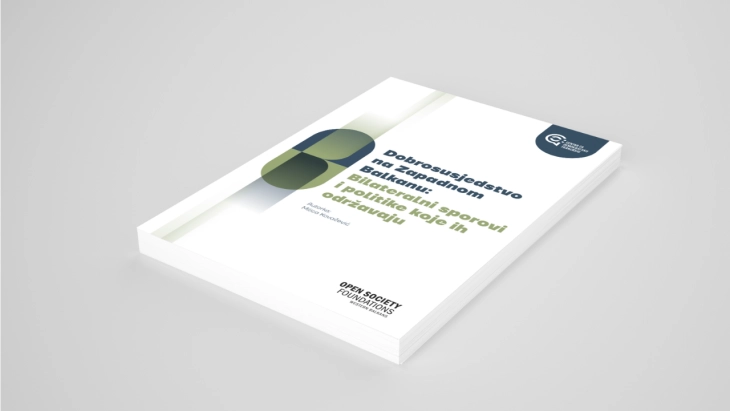
The CDT stated that the analysis “Good Neighborly Relations in the Western Balkans: Bilateral Disputes and the Policies That Maintain Them” shows that unresolved issues between states, which are pushed under the carpet for the sake of EU accession and domestic stability, threaten to become a serious problem over time.
“Although the EU has decided that bilateral disputes should not be imported into the Union, the GNR principle is often used as a tool to politicize existing tensions between members and candidate countries”, the CDT stated.
The NGO said that it was only the 2018 Strategy for the Western Balkans that explicitly raised good neighborly relations to the level of “must”, i.e. made them a mandatory condition for membership, with the message that the “importation” of disputes would not be allowed.
The CDT said that it is clear that the principle of good neighborly relations carries an incomparably greater weight in the Western Balkans than in any previous round of enlargement.
As they stated, one of the most current political issued is the negotiations between Montenegro and Croatia over open issues, such as the ownership of the Jadran ship, establishing the facts related the war, and the border at Prevlaka.
The CDT said that there are some technical issues with Bosnia and Herzegovina, Albania and Kosovo that are being resolved constructively, as well as that Montenegro has unresolved disputes with Serbia as well.
It is also noted that, in addition to drawing lines between states, Montenegro and other neighboring countries also have to address numerous identity and war-related issues.
“Therefore, it is clear that the principle of good neighborly relations enables the countries that join the EU to condition candidate countries. For example, if Montenegro becomes the next EU member, it could have a stronger position for resolving disputes with Serbia, Albania or other candidates. And where there is room for conditioning, there is also room for political abuse”, the press release said.