CBCG presents results of European agenda and payment system reform in Washington, D. C.
Podgorica, (MINA-BUSINESS) – The Central Bank (CBCG) has fulfilled all of its obligations from its EU agenda for last year, Governor Irena Radovic said, adding that further cooperation with the International Monetary Fund (IMF) will be of particular importance for strengthening institutional capacities.
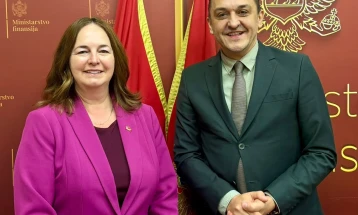
As part of its participation in the Annual World Bank and IMF Meetings in Washington, Radovic held a meeting with Alfred Kammer, Director of the IMF’s European Department.
The meeting addressed current macroeconomic and financial developments, and the CBCG’s progress in fulfilling obligations under the European agenda.
Radovic informed Kammer of the CBCG’s results in the process of European integration, noting that the institution has fully implemented its EU agenda commitments for 2025. Particular attention was drawn to full alignment in key areas, including banking supervision, payment systems, anti-money laundering and counter-terrorist financing, and bank resolution, as well as to the tangible benefits of Montenegro’s accession to the SEPA area, which has already generated savings worth millions for citizens and businesses within the first six months.
It was also noted that continued cooperation with the IMF will be highly important for strengthening institutional capacities and preparing for a more demanding framework of economic convergence with the European Union.
Radovic also participated in the plenary meeting of the International Monetary and Financial Committee (IMFC), the IMF’s key advisory body for the supervision and management of the international monetary and financial system. The meeting conveyed that the global economy is facing heightened risks and spillover effects from geopolitical crises, underscoring the need for pragmatic and agile economic policy responses grounded in credible institutional frameworks.
The CBCG delegation also took part in a roundtable dedicated to the implementation of the TIPS Clone project, which brought together governors and representatives of central banks from the Western Balkans, the Banca d’Italia, and the World Bank. The discussion focused on a review of activities to date and preparations for the planned launch of the project, which will enable a modern instant payment system in the region.
Radovic presented Montenegro’s progress in this process and announced that the introduction of the TIPS Clone system will further enhance the efficiency of payment transactions and support Montenegro’s continued integration into the European financial space.
Radovic also spoke at a roundtable dedicated to the WE Finance Code initiative. On that occasion, she presented experiences in implementing the programme, noting that Montenegro is recognised as one of the most successful countries in implementing the WE Finance initiative, thanks to strong institutional support, effective coordination, and partnerships with international financial institutions.
Speaking about the results, Radovic pointed out that the CBCG’s commitment has been key to establishing a functional national framework that integrates data, policies, and concrete activities aimed at improving access to finance for women entrepreneurs.
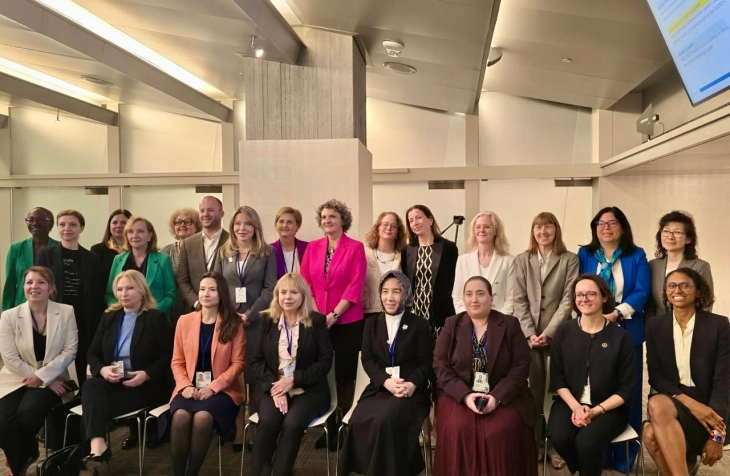
Radovic also participated in the Women Leaders’ Breakfast Discussion, organized by Antonella Bassani, Vice President of the World Bank for Europe and Central Asia. This event brought together senior representatives of governments and central banks from the region, Europe, and Central Asia to exchange experiences on reforms, market instruments, and institutional leadership aimed at strengthening more resilient and inclusive financial systems.
Particular focus was placed on the FINGROW programme, a World Bank platform aimed at improving access to finance for the economy, especially for small and medium-sized enterprises, as well as businesses led by young people and women.