Armenko: Montenegro must not enter election year with incomplete Constitutional Court
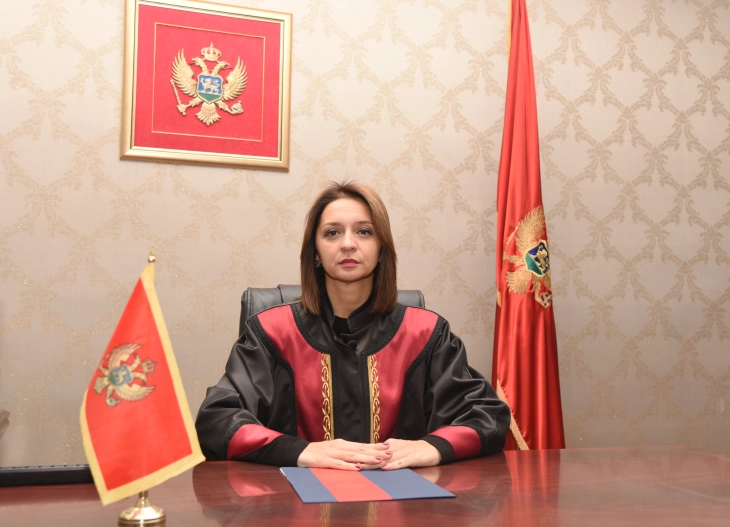
Podgorica, (MINA) – Montenegro must not enter an election year with an incomplete Constitutional Court, Constitutional Court President Snezana Armenko has stated, insisting that the Court cannot be considered fully functional without all seven judges on the bench.
Commenting on the fact that Parliament has still not considered the two candidates put forward by President Jakov Milatovic, Armenko told MINA News Agency that any number of judges below the Court’s full composition must not be socially or politically accepted as a functional Constitutional Court.
“As the Parliament was concerned that, for a certain period, it operated with one member fewer than the number prescribed by the Constitution, likewise it must not be socially and politically accepted that any composition smaller than the seven judges stipulated by the Constitution constitutes a fully functional Constitutional Court,” Armenko said.
She warned that, otherwise, an incomplete panel of judges, when deciding cases, may result in no decision being adopted in situations of a split opinion, which, as she added, is ultimately always attributed to the Constitutional Court, often with the label of a political court.
Asked whether the Court is prepared for a potentially higher number of constitutional complaints, given that parliamentary elections will be held next year, Armenko underlined the necessity of having a fully composed Constitutional Court.
“Montenegro should not enter a election year without a full composition of the Constitutional Court. Otherwise, there is a risk of ending up in a situation where the election results cannot be proclaimed due to the Constitutional Court failing to adopt a final decision,” Armenko said.
She added that if, even in a single case, the Constitutional Court is split in its votes on a particular electoral issue and is therefore unable to adopt a final decision, this would lead to a blockage of the electoral process—over something that cannot be attributed to the Court itself.
Armenko recalled that such a situation occurred in 2022 during the local elections in Podgorica, when the authorities remained in a technical mandate for six months until new judges were appointed.